Introduction
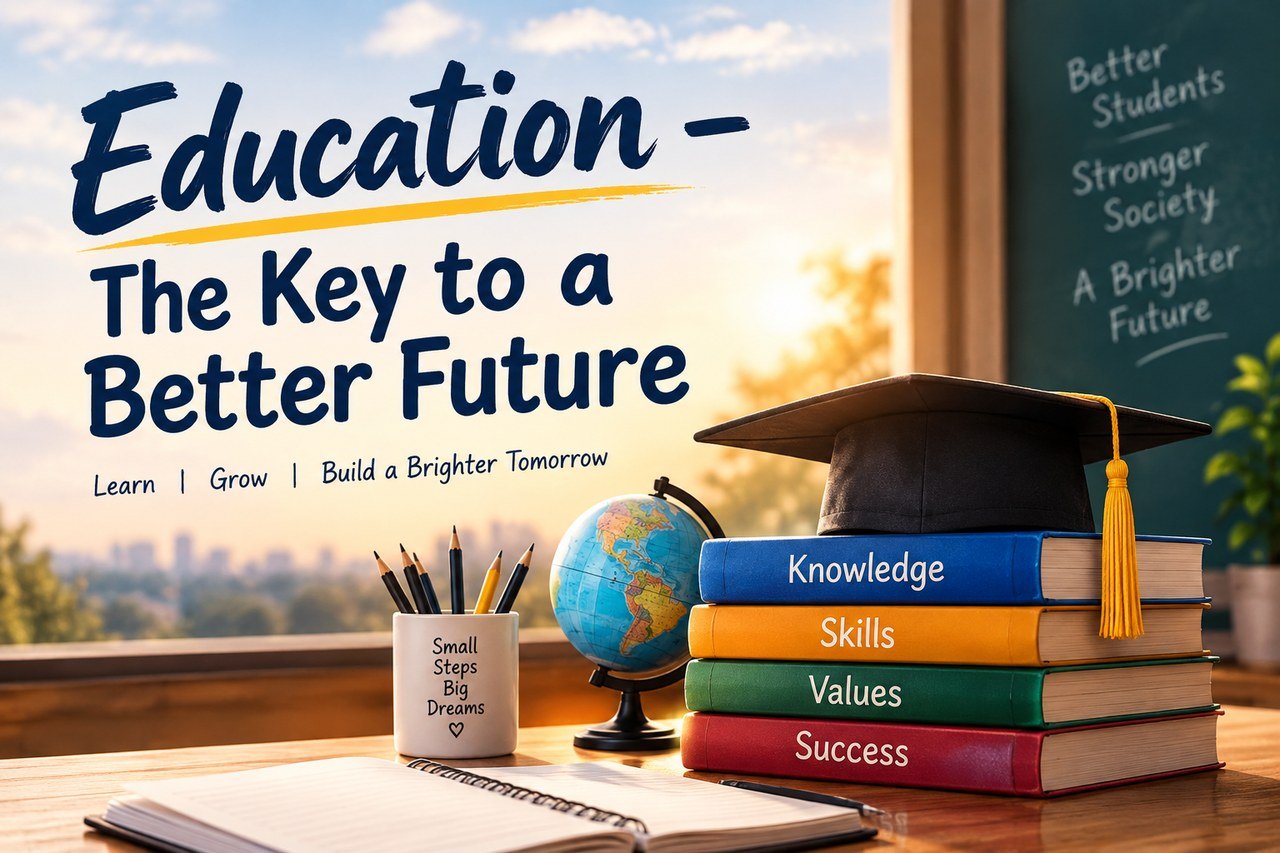
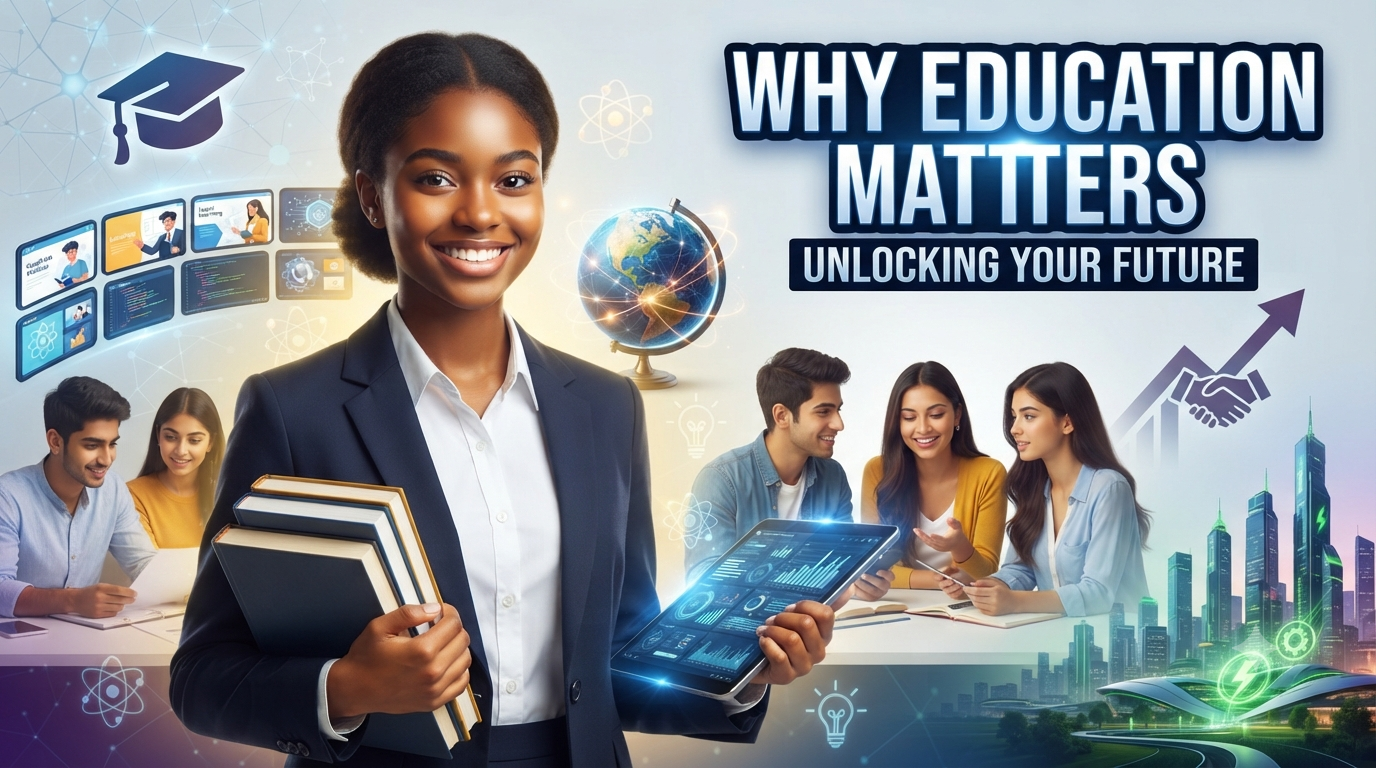
Education is one of the most important foundations of human life and social development. It is not limited to reading books, passing examinations, or obtaining a degree. Education is a continuous process through which people acquire knowledge, develop skills, understand values, improve their thinking, and learn how to participate responsibly in society. From childhood to adulthood, learning influences the way people communicate, make decisions, solve problems, work with others, and respond to changes around them.
In the modern world, the importance of education has increased significantly. Technology is developing rapidly, workplaces are changing, and societies are becoming increasingly connected. People need more than basic knowledge to deal with these changes. They need critical thinking, digital skills, communication abilities, creativity, adaptability, and the confidence to continue learning throughout life.
UNESCO describes education as a fundamental human right and emphasizes that it helps individuals develop knowledge, skills, confidence, and the ability to participate fully in society. It also connects education with social inclusion, economic development, equality, and sustainable development. �
UNESCO +1
Therefore, education should be viewed not simply as a means of getting a job but as a powerful tool for improving individuals, families, communities, and nations.
1. Education Develops Knowledge and Understanding
The most basic purpose of education is to provide knowledge. Schools, colleges, universities, vocational institutions, and other learning environments introduce people to subjects such as mathematics, science, languages, history, technology, economics, and social studies.
Knowledge helps people understand the world around them. For example, scientific education helps students understand natural phenomena, while mathematical education develops the ability to work with numbers and solve problems. Language education helps people communicate their thoughts and understand others.
However, education is more than collecting information. A truly educated person should understand how to use knowledge appropriately. Education teaches learners to ask questions, examine information, identify problems, and search for reasonable solutions.
This becomes especially important today because people have access to enormous amounts of information through smartphones and the internet. Not every piece of information available online is accurate. Education can help individuals evaluate information instead of accepting every claim immediately.
2. Education Improves Critical Thinking
Critical thinking is an essential skill in modern society. It means examining information carefully, understanding different viewpoints, identifying evidence, and making decisions based on reasoning.
Students who develop critical-thinking abilities can approach problems more systematically. Instead of simply memorizing an answer, they can ask why something happens, what evidence supports it, and whether another solution might be possible.
This skill is useful in almost every area of life. A person may need critical thinking while choosing a career, managing money, understanding news, using technology, or solving a problem at work.
Education therefore helps people become independent thinkers. It gives them the ability to learn from different sources and form informed conclusions.
3. Education Creates Employment Opportunities
Education plays an important role in preparing people for employment. Modern workplaces require different types of knowledge and technical skills. Engineers, teachers, doctors, accountants, technicians, designers, programmers, managers, and many other professionals require specialized education and training.
Vocational and technical education is particularly important because it connects learning with practical skills. A student who learns construction technology, electrical work, computer applications, mechanical skills, healthcare techniques, or another trade can develop abilities that are useful in the workplace.
UNESCO notes that educational attainment is associated with employment-related skills, earning potential, and broader economic and social benefits. �
UIS
Education does not guarantee employment by itself, but quality education can improve a person's preparation for employment and entrepreneurship. It can also make it easier for individuals to adapt when industries and job requirements change.
4. Education Supports Economic Development
A country's economic development depends partly on the knowledge and skills of its population. Educated workers can contribute to businesses, industries, research, public services, and entrepreneurship.
When people receive quality education, they can learn new technologies, improve production methods, develop businesses, and contribute to innovation. Education can therefore benefit not only individuals but also the wider economy.
For developing societies, investment in education can help create a skilled workforce. Skilled workers can contribute to infrastructure, manufacturing, agriculture, information technology, healthcare, construction, transportation, and other sectors.
UNESCO identifies education as an important investment for economic growth and poverty reduction and reports that educational progress has contributed to reductions in extreme poverty. �
UNESCO
5. Education Helps Reduce Poverty
Poverty is influenced by many factors, but education can help people develop opportunities for better employment and income.
A person with useful knowledge and skills may have more options for employment, vocational work, entrepreneurship, or further education. Education can also help people understand financial concepts such as saving, budgeting, borrowing, investment, and responsible spending.
Education can have an impact across generations as well. Educated parents are often better positioned to understand the importance of children's schooling and may be able to support their children's learning.
For this reason, improving access to quality education can contribute to breaking long-term cycles of disadvantage.
6. Education Promotes Equality
Education can provide opportunities to people from different social and economic backgrounds. When access to quality education is equitable, individuals have greater opportunities to develop their abilities regardless of their family circumstances.
Education is particularly important for girls and women. Access to education can expand opportunities for employment, participation in society, and independent decision-making. UNESCO highlights education as an important factor in advancing gender equality and social inclusion. �
UNESCO +1
However, equality in education does not simply mean allowing everyone to enter a school. Students may face different barriers, including poverty, disability, geographic isolation, lack of resources, conflict, or discrimination. Creating genuinely inclusive education requires attention to these barriers.
7. Education Builds Character and Values
Education also contributes to personal development. Along with academic knowledge, students can learn values such as responsibility, honesty, respect, cooperation, discipline, empathy, and tolerance.
These values are important for creating healthy relationships and communities. A person who understands the importance of respecting others is more likely to communicate peacefully and cooperate with people who have different backgrounds or opinions.
Schools and colleges provide opportunities for students to work in groups, participate in activities, follow rules, take responsibility, and interact with people from different backgrounds.
Therefore, education should develop the whole person rather than focusing only on examination marks.
8. Education Improves Communication Skills
Communication is necessary in almost every area of modern life. People communicate through conversations, emails, messages, presentations, reports, social media, and professional documents.
Education helps learners develop reading, writing, speaking, and listening skills. Good communication can improve academic performance as well as professional relationships.
For example, an engineer may need to explain a technical problem to a client. A business owner may need to communicate with customers. A teacher must explain concepts clearly to students. A healthcare professional needs to communicate information carefully with patients.
Thus, communication skills are valuable across professions and everyday life.
9. Education Encourages Scientific and Technological Development
Science and technology have transformed modern society. Smartphones, computers, artificial intelligence, medical technologies, transportation systems, renewable energy, and advanced construction techniques are examples of areas influenced by education and research.
Scientists, engineers, technicians, and researchers require strong educational foundations to develop new ideas and solve complex problems.
Education also helps ordinary people use technology responsibly. Digital literacy enables individuals to operate devices, access online services, protect personal information, identify suspicious information, and learn new digital tools.
As technology continues to change, lifelong learning becomes increasingly important.
10. The Importance of Digital Education
Digital technology has become an important part of education. Online courses, educational videos, digital libraries, learning applications, virtual classrooms, and other resources can provide additional learning opportunities.
Digital education can be especially useful when students cannot easily access traditional educational resources. A learner with a smartphone and internet connection may be able to access lectures, books, tutorials, and educational materials from different parts of the world.
At the same time, digital education has challenges. Not every student has reliable internet access, suitable devices, or a quiet place to study. There are also concerns about misinformation, excessive screen time, privacy, and responsible use of technology.
Therefore, digital education should complement quality teaching rather than simply replacing human interaction.
11. Education and Health Awareness
Education can improve people's understanding of health and wellbeing. Basic knowledge about nutrition, hygiene, sanitation, exercise, disease prevention, and healthcare can influence everyday decisions.
An educated person may be better prepared to understand health information, recognize the importance of preventive care, and seek professional assistance when necessary.
Education can also improve awareness about public health issues. Communities with better access to reliable information can respond more effectively to health challenges.
This demonstrates that the benefits of education extend beyond classrooms and workplaces.
12. Education Supports Environmental Awareness
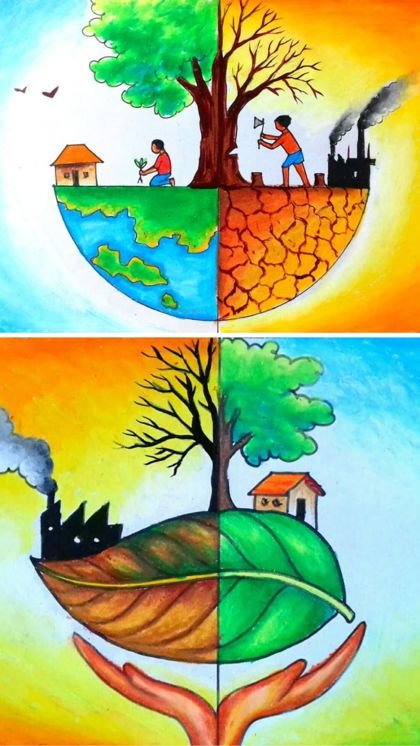
Environmental challenges such as climate change, pollution, waste management, water scarcity, and loss of biodiversity require informed action.
Education can help people understand how human activities affect the environment. Students can learn about recycling, water conservation, renewable energy, sustainable construction, pollution prevention, and responsible consumption.
Environmental education can also influence practical behavior. For example, students who understand the importance of conserving water may encourage their families and communities to avoid unnecessary wastage.
UNESCO identifies education as an important component of sustainable development and notes its connection with environmental awareness and resilience. �
UNESCO +1
13. Education and Social Responsibility
A society requires responsible citizens. Education can help people understand their responsibilities toward their families, communities, workplaces, and environment.
Students can learn about laws, civic responsibilities, social institutions, human rights, and the importance of peaceful cooperation. They can also develop an understanding of different cultures and perspectives.
Education does not mean that everyone must think in the same way. Instead, it can help people communicate respectfully, examine evidence, and participate constructively in society.
14. Education Encourages Lifelong Learning
Learning does not end when a person finishes school or college. Modern careers and technologies change continuously, making lifelong learning increasingly important.
A person may learn new software, acquire a professional certification, develop a new language, learn business skills, or retrain for a different occupation.
UNESCO emphasizes lifelong learning as an important part of education because changing economic, technological, and social conditions require people to continue developing knowledge and skills throughout their lives. �
UNESCO Institute for Lifelong Learning
Lifelong learning also has personal benefits. People can learn new hobbies, explore interests, improve their understanding of the world, and remain intellectually active.
15. Challenges in Education
Despite its importance, education systems face many challenges. Some students do not have access to quality schools, trained teachers, learning materials, technology, or safe learning environments.
Economic inequality can affect educational opportunities. Students from disadvantaged backgrounds may face difficulties in continuing their studies. Children with disabilities may encounter physical, technological, or social barriers.
Conflict and natural disasters can also interrupt education. UNESCO reports that millions of children and young people worldwide remain out of school, showing that access to education remains a major global challenge. �
UNESCO
Another challenge is the difference between access and quality. Simply attending school does not guarantee meaningful learning. Students need competent teachers, appropriate learning materials, supportive environments, and opportunities to develop practical skills.
16. The Role of Teachers
Teachers are at the heart of education. Technology can provide information, but teachers play an important role in guiding students, explaining difficult concepts, encouraging questions, identifying learning difficulties, and providing feedback.
A good teacher can motivate students to develop curiosity and confidence. Teachers also influence students through their behavior, communication, fairness, and commitment to learning.
For education systems to improve, teachers need appropriate training, resources, professional development, and supportive working conditions. UNESCO estimates that millions of additional teachers will be needed globally to achieve universal primary and secondary education by 2030. �
UNESCO
17. Education and the Future
The future will require people who can adapt to new circumstances. Artificial intelligence, automation, climate change, digital transformation, changing industries, and global connectivity are reshaping the world.
Education must therefore prepare students not only for today's jobs but also for continuous change. Creativity, problem-solving, communication, collaboration, digital literacy, and adaptability will remain important.
At the same time, human qualities such as empathy, responsibility, ethical reasoning, and cooperation will continue to matter. Technology can perform many tasks, but society still needs people who can make responsible decisions and understand the consequences of their actions.
Conclusion
Education is one of the strongest foundations of individual and social development. It provides knowledge, develops critical thinking, improves communication, supports employment, encourages innovation, and contributes to economic development. It can also promote equality, environmental awareness, health awareness, social responsibility, and lifelong learning.
The true purpose of education goes beyond obtaining marks or certificates. It is about helping individuals develop the knowledge, skills, values, and confidence needed to live meaningful lives and contribute positively to society.
Modern society is changing rapidly, so education must change with it. Schools, colleges, teachers, governments, families, communities, and learners all have roles to play in creating an education system that is accessible, inclusive, practical, and capable of preparing people for the future.
Quality education should therefore be treated as a long-term investment in people and society. When individuals have meaningful opportunities to learn, they can develop their potential and contribute to their families, communities, economies, and the wider world. UNESCO likewise emphasizes that education is a fundamental right and a foundation for inclusive societies and sustainable development. �
UNESCO +1
Ultimately, education does not simply prepare a person to earn a living. It helps a person understand life, make informed choices, solve problems, respect others, adapt to change, and participate responsibly in society. For this reason, the importance of education in modern society cannot be separated from the future of individuals and communities.