The Importance of Education
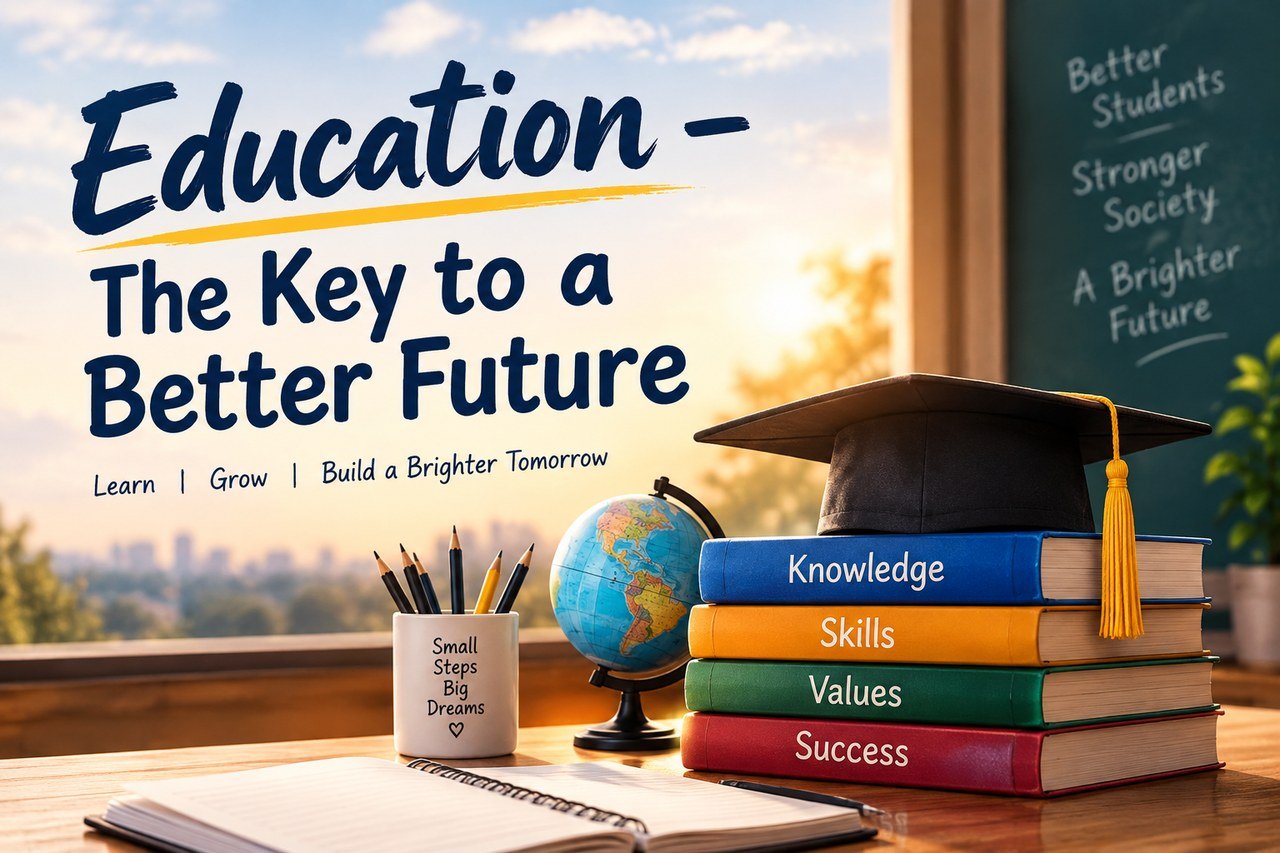
Education is one of the most important things in our life. It gives us knowledge, skills, confidence, and the ability to understand the world around us.
Education helps us make better decisions and achieve our goals. It also teaches us discipline, responsibility, and good values. A well-educated person can contribute positively to society and help the country develop.
Schools and colleges provide knowledge, but learning does not stop there. We can learn from books, technology, experiences, and the people around us.
Therefore, education is the key to a better future. Every person should have the opportunity to receive good education and use their knowledge to build a successful and meaningful life.
The Importance of Education in Our Life and Society
Introduction
Education is one of the most powerful tools available to human beings. It is not simply the process of reading books, attending school, passing examinations, or obtaining certificates. Education is a lifelong process through which people gain knowledge, develop skills, understand values, improve their thinking, and learn how to live responsibly in society. From childhood to adulthood, education plays an important role in shaping our personality, character, career, relationships, and future.
Every human being has the ability to learn. A child begins learning from family and surroundings even before entering school. The child learns to speak, walk, communicate, recognize people, and understand basic values. Later, schools and educational institutions provide organized learning. As people grow older, they continue learning through higher education, work, experience, technology, books, and interactions with other people.
Education helps individuals understand the difference between right and wrong. It develops confidence and encourages people to solve problems instead of simply accepting them. It also gives people opportunities to improve their economic conditions. A person with useful knowledge and skills can find employment, start a business, develop new ideas, and contribute to society.
The importance of education becomes even greater in the modern world. Technology is developing rapidly, industries are changing, and new careers are appearing. People need to continuously update their knowledge and skills to adapt to these changes. Education provides the foundation required for such development.
Meaning of Education
The word education has a broad meaning. In a narrow sense, education refers to formal learning in schools, colleges, universities, and other institutions. In a broader sense, education includes everything that helps a person learn and develop.
Education includes academic knowledge as well as practical knowledge. Mathematics can teach logical thinking, science can help us understand nature, languages can improve communication, history can help us understand the past, and physical education can encourage health and discipline.
True education should not only make a person knowledgeable but should also make the person responsible, respectful, independent, and capable of thinking critically.
Education Begins at Home
The first school of every child is the home. Parents and family members play an important role in early education. Children observe the behavior of adults and often learn by copying what they see.
At home, children learn basic manners, communication, responsibility, respect, sharing, cleanliness, and discipline. These early lessons create the foundation for later development.
Parents can encourage children to ask questions and explore their surroundings. When children are encouraged to learn rather than simply memorize information, they can develop curiosity and creativity.
Family support is particularly important because education is not limited to classrooms. A supportive home environment can motivate children to study and develop confidence.
Role of Schools
Schools provide organized education. They bring students together with trained teachers and structured learning materials.
A good school does more than prepare students for examinations. It helps them develop communication skills, teamwork, discipline, creativity, leadership, and social responsibility.
Teachers have an important role in this process. A teacher can inspire students to become interested in a subject and encourage them to overcome difficulties.
Schools also provide opportunities for students to participate in sports, cultural activities, debates, competitions, science projects, and other activities. These experiences help students discover their interests and abilities.
Education and Knowledge
Knowledge allows people to understand the world. Without knowledge, it can be difficult to make informed decisions.
Education helps people understand basic facts about health, science, society, finance, technology, law, environment, and many other areas.
Knowledge also protects people from misinformation. In the digital age, enormous amounts of information are available online. Not all information is accurate. Educated individuals can learn to question sources, compare evidence, and think critically.
Therefore, education is not simply about collecting information. It is also about learning how to evaluate and use information correctly.
Education and Critical Thinking
Critical thinking is one of the most valuable abilities developed through education. It means examining information carefully instead of accepting every statement immediately.
A person with critical-thinking skills can ask questions such as:
Is this information reliable?
What evidence supports this claim?
Are there other explanations?
What are the possible consequences?
Is the source trustworthy?
These questions are useful in everyday life. They can help people make better decisions about careers, money, technology, relationships, and many other matters.
Education and Employment
Education is closely connected with employment and career development. Many jobs require specific educational qualifications and technical skills.
Doctors require medical education, engineers require engineering knowledge, teachers require educational training, accountants require financial knowledge, and technicians need specialized technical skills.
However, education is useful even when a particular job does not require a high academic qualification. Basic literacy, numeracy, communication, digital skills, and problem-solving abilities are valuable in almost every workplace.
As industries become more technologically advanced, workers need to learn new skills. Continuous education can therefore help people remain productive throughout their careers.
Education and Economic Development
Education contributes to economic development. When people acquire useful skills, they can participate more effectively in the workforce.
A skilled population can improve productivity, create businesses, develop technologies, and provide services. Countries that invest in education can develop stronger human resources.
Education can also help families improve their financial circumstances. Better skills may provide access to a wider range of employment opportunities.
Entrepreneurship is another important area. Education can teach people about planning, accounting, marketing, technology, communication, and management. These skills can help individuals develop and manage businesses.
Education and Poverty
Education can play an important role in reducing poverty. Poverty is influenced by many factors, but access to quality education can improve a person's opportunities.
A child from a financially disadvantaged family who receives good education may gain skills that provide better employment opportunities in adulthood.
Education can also help people understand government services, financial systems, employment opportunities, and social programs.
However, education alone cannot eliminate poverty. Economic opportunities, healthcare, infrastructure, social protection, and fair access to resources are also important.
Education and Women
Education is especially important for women and girls. When girls receive quality education, they can gain knowledge, skills, confidence, and greater opportunities to participate in economic and social life.
Educated women can contribute to their families and communities in many ways. They can pursue careers, start businesses, participate in public life, and make informed decisions.
Education can also help women understand health, financial matters, legal rights, and opportunities available to them.
Providing equal educational opportunities to girls and boys is therefore important for the development of families and society.
Education and Health
Education is closely connected with health. People need knowledge to understand healthy habits and make informed choices.
Education can help individuals understand the importance of nutrition, cleanliness, exercise, sleep, hygiene, preventive healthcare, and seeking professional medical assistance when necessary.
Health education is particularly important because misinformation can sometimes cause harmful decisions.
Schools can teach students basic information about hygiene, nutrition, physical activity, mental well-being, and disease prevention.
Education and Technology
Technology has transformed education. Students can now access digital books, online courses, educational videos, virtual classrooms, simulations, and other resources.
A smartphone or computer can provide access to enormous amounts of educational material. Students living far from major educational centers can benefit from online learning.
However, technology must be used responsibly. Spending excessive time on entertainment or social media can reduce concentration. Students should learn digital literacy, including how to protect personal information and identify unreliable information.
Technology should be considered a tool for learning rather than a replacement for thinking.
Online Education
Online education has become an important part of modern learning. Students can attend courses from home and learn at their own pace.
Online education can be especially useful for people who cannot easily attend traditional classes. Working adults can also use online courses to develop new skills.
However, online education has challenges. Students need self-discipline, reliable internet access, suitable devices, and the ability to study independently.
The best approach may often involve combining digital resources with guidance from teachers and practical experience.
Education and Communication
Communication is essential in personal and professional life. Education helps people improve their ability to read, write, speak, listen, and express ideas.
Good communication can prevent misunderstandings and help people work effectively with others.
Learning multiple languages can provide additional opportunities. Language education can help people communicate across regions and cultures.
Communication skills are particularly important in interviews, workplaces, presentations, business, customer service, and leadership.
Education and Character
Education should contribute to character development. Knowledge without responsibility can sometimes be misused.
Students should learn values such as honesty, respect, kindness, responsibility, patience, fairness, and cooperation.
Character education does not mean simply memorizing moral statements. Students should have opportunities to practice values in real situations.
Helping others, respecting different opinions, taking responsibility for mistakes, and completing duties are examples of character development.
Education and Discipline
Discipline helps people achieve long-term goals. Education provides opportunities to develop disciplined habits.
Students learn to attend classes, complete assignments, prepare for examinations, manage time, and follow rules.
Discipline should not mean fear or blind obedience. Healthy discipline involves understanding responsibilities and developing self-control.
A disciplined person can organize work, avoid unnecessary distractions, and continue working toward goals even when motivation is low.
Education and Time Management
Time is limited, and learning how to use it effectively is an important skill.
Students often have multiple responsibilities, including studying, homework, family activities, sports, rest, and hobbies.
Time management helps students organize these activities. Creating a realistic schedule, setting priorities, avoiding unnecessary distractions, and taking sufficient rest can improve productivity.
Time-management skills remain useful throughout adult life.
Education and Creativity
Creativity is the ability to generate new ideas and approaches. Education can encourage creativity when students are given opportunities to explore rather than simply memorize.
Art, music, writing, science experiments, programming, design, and problem-solving activities can encourage creative thinking.
Creativity is also important in business and technology. Many innovations begin with someone asking whether an existing process can be improved.
Schools can support creativity by allowing students to ask questions, make mistakes, experiment, and develop their own ideas.
Education and Science
Science education helps people understand the natural world.
Through science, students learn about matter, energy, living organisms, the Earth, space, technology, and many other subjects.
Scientific education also teaches methods of observation, experimentation, evidence, and logical reasoning.
A scientifically literate society can better understand technological developments and public information related to science.
Education and the Environment
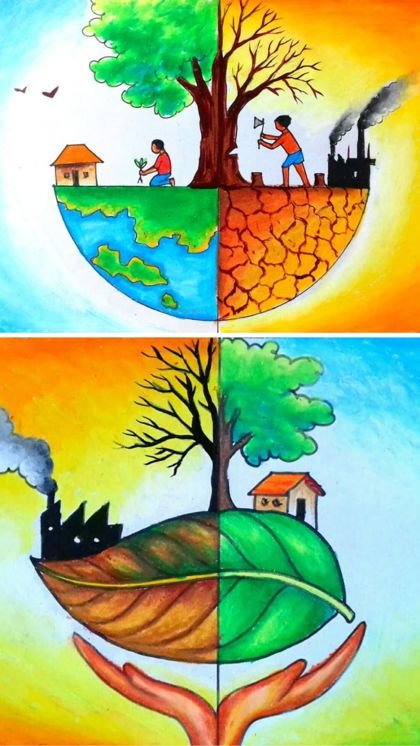
Environmental education is increasingly important. Human activities affect forests, rivers, oceans, air quality, soil, wildlife, and climate.
Students can learn about conservation, waste reduction, recycling, renewable energy, biodiversity, and responsible consumption.
Environmental education can encourage people to consider how everyday choices affect the natural world.
Protecting the environment requires individual responsibility as well as action from governments, businesses, and communities.
Education and Democracy
Education can help citizens understand how institutions and societies function. Civic education can explain constitutions, laws, public institutions, rights, responsibilities, and democratic processes.
An informed citizen can examine information, understand different viewpoints, and participate responsibly in civic life.
Education should encourage people to think independently and respect the fact that other citizens may hold different views.
Education and Equality
Equal access to quality education is an important social goal. Children should not be denied educational opportunities because of their family's financial circumstances, location, gender, disability, or other barriers.
Educational inequality can arise from differences in school quality, household income, transportation, digital access, language, and other factors.
Addressing these barriers requires cooperation among families, schools, communities, governments, and other organizations.
Rural Education
Education is particularly important in rural areas. Rural students may face challenges such as distance from schools, limited transportation, shortages of teachers, or reduced access to digital resources.
Improving rural education can support local development by helping young people gain useful skills without necessarily leaving their communities.
Digital education can help connect rural learners with additional resources, although internet access and digital infrastructure remain important requirements.